
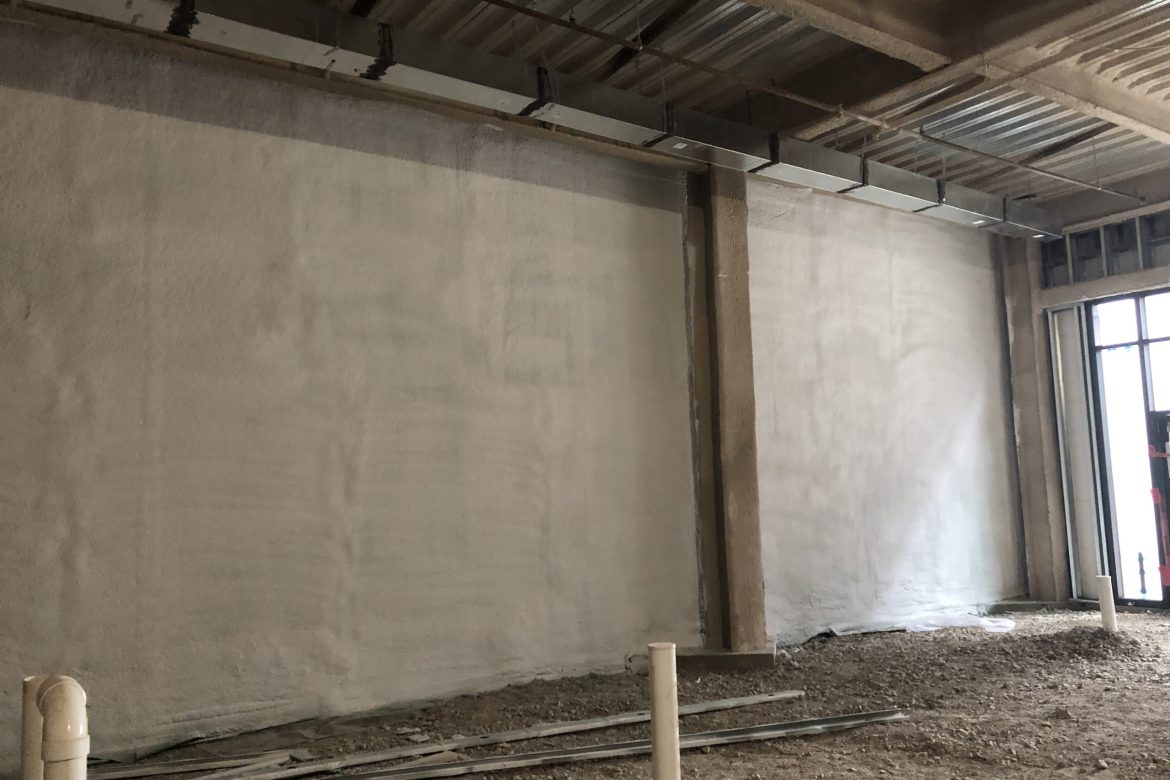
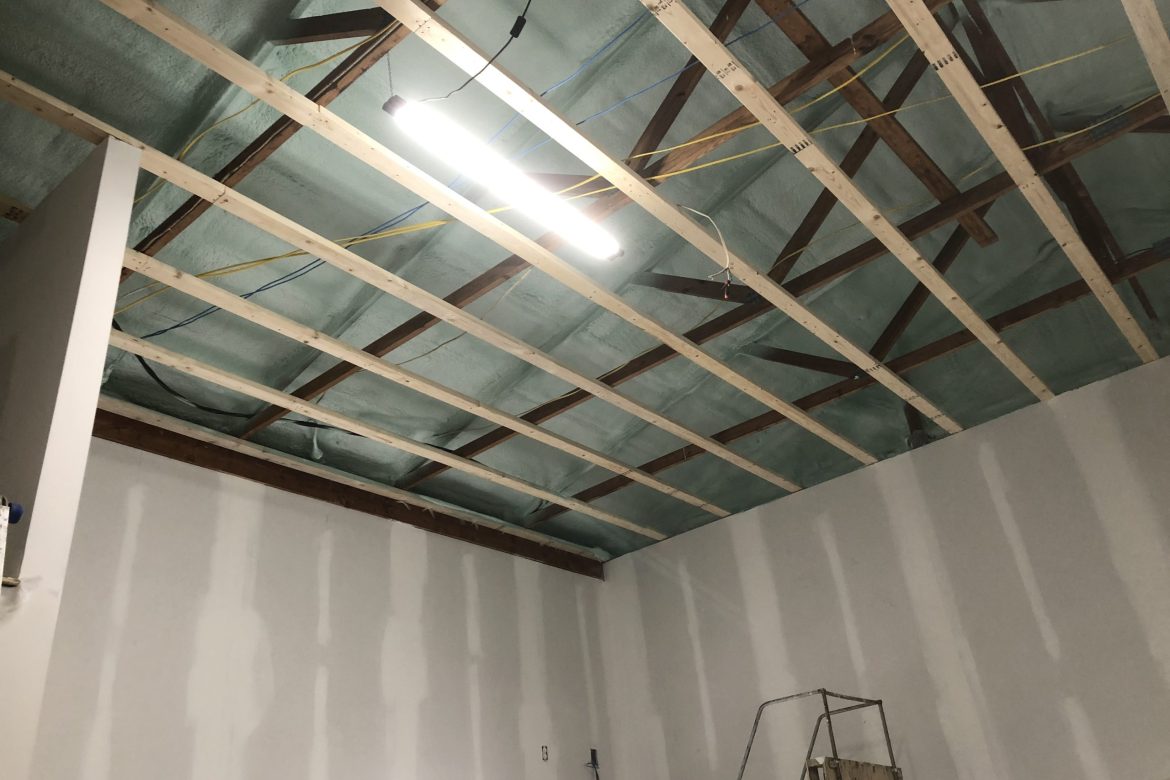
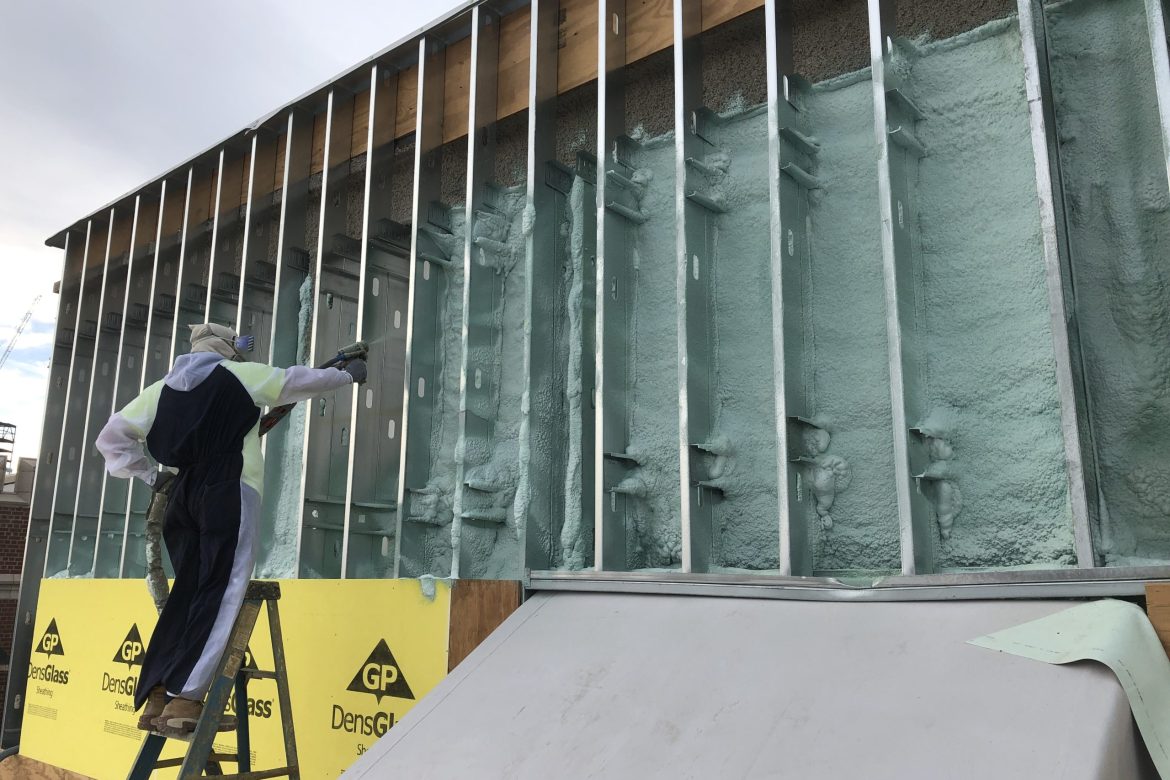

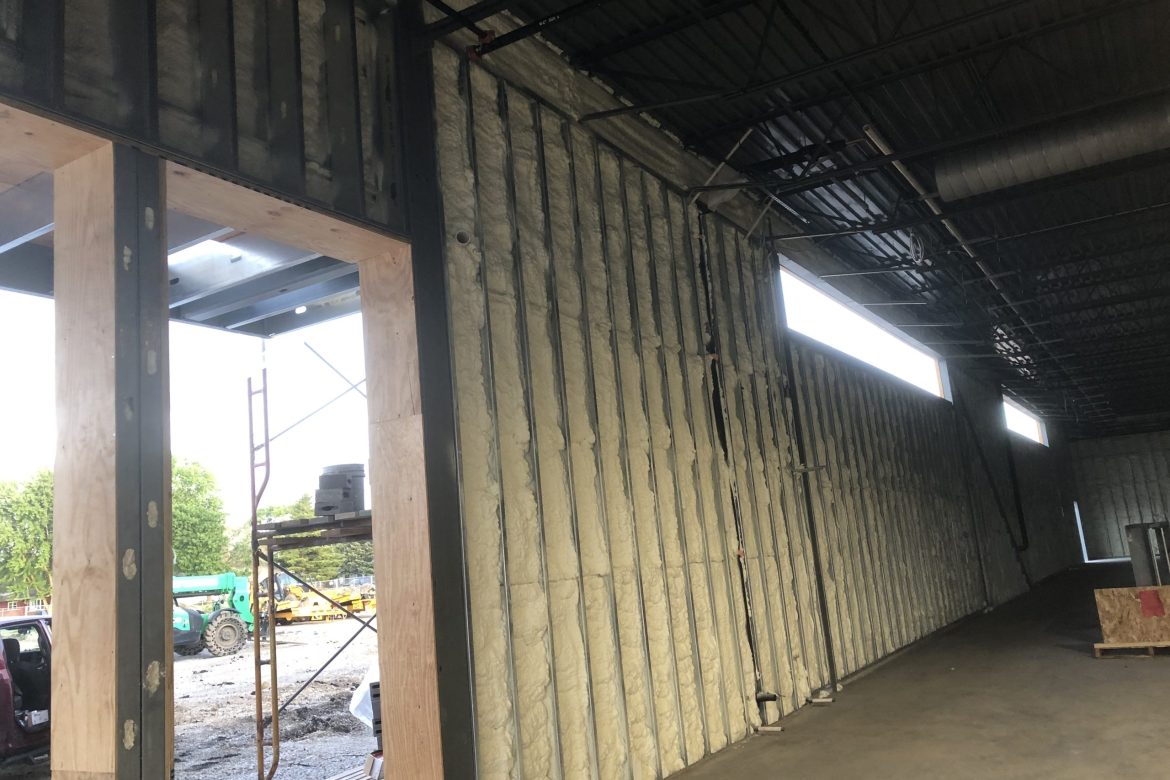

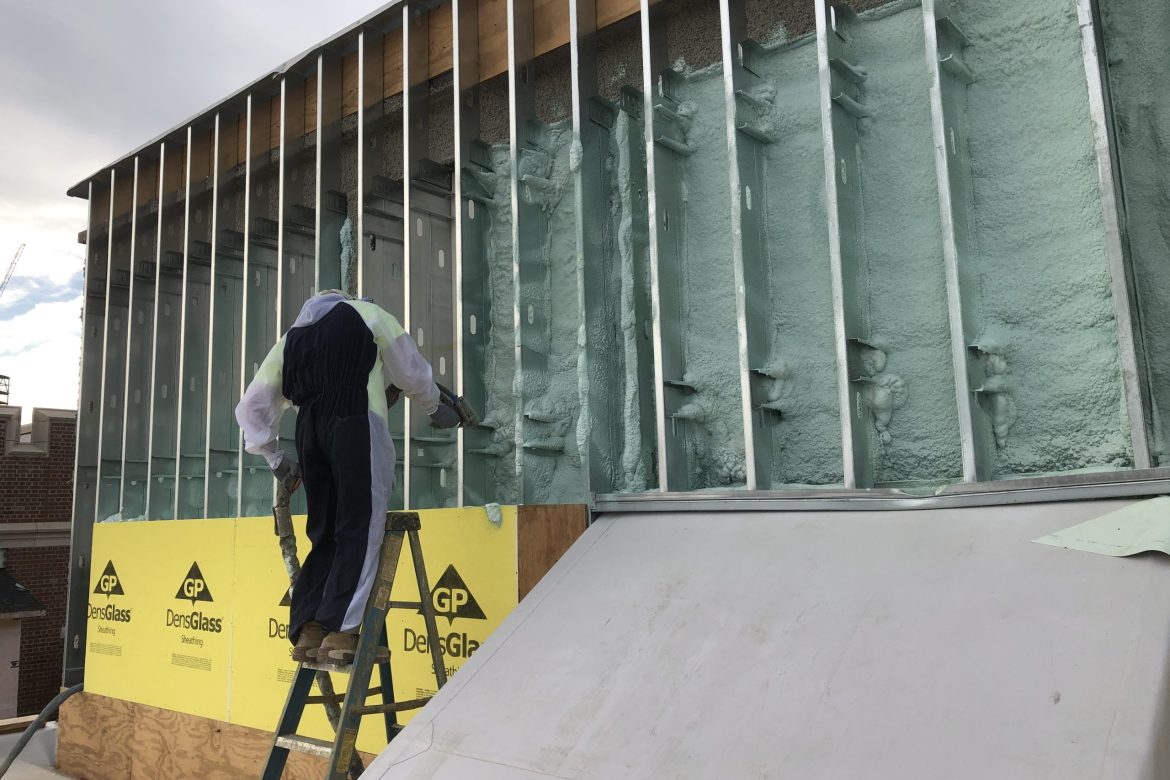
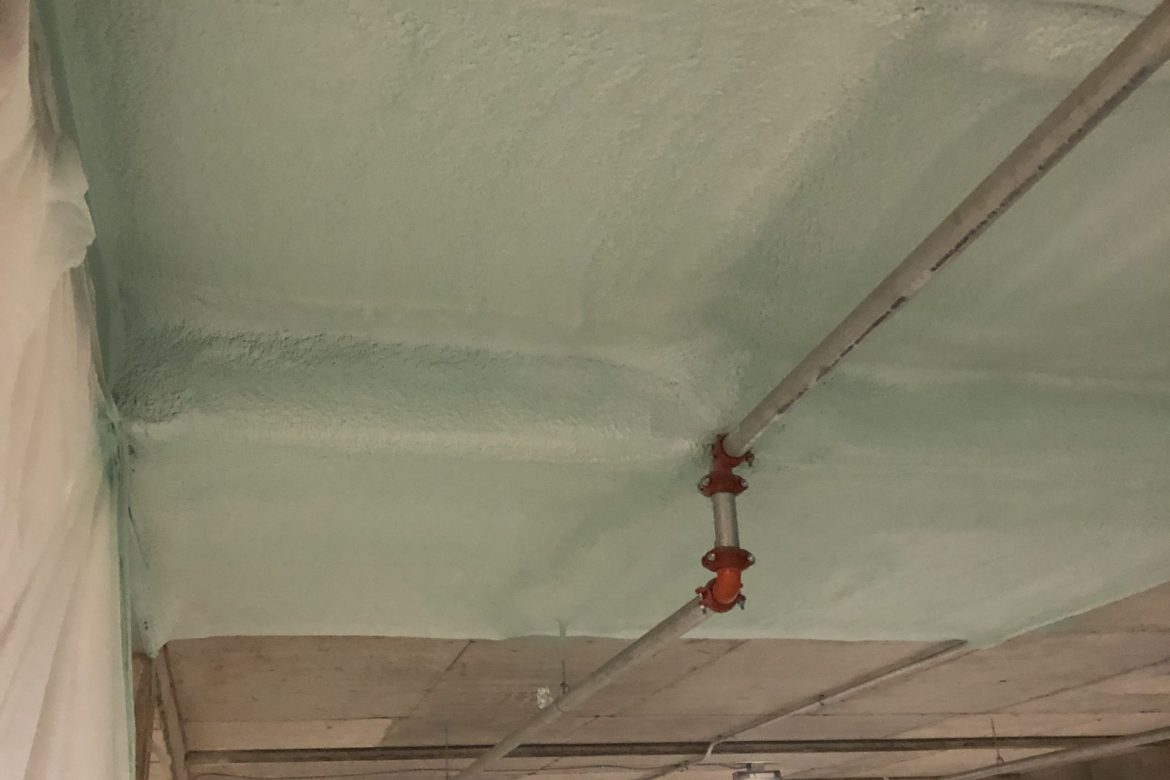


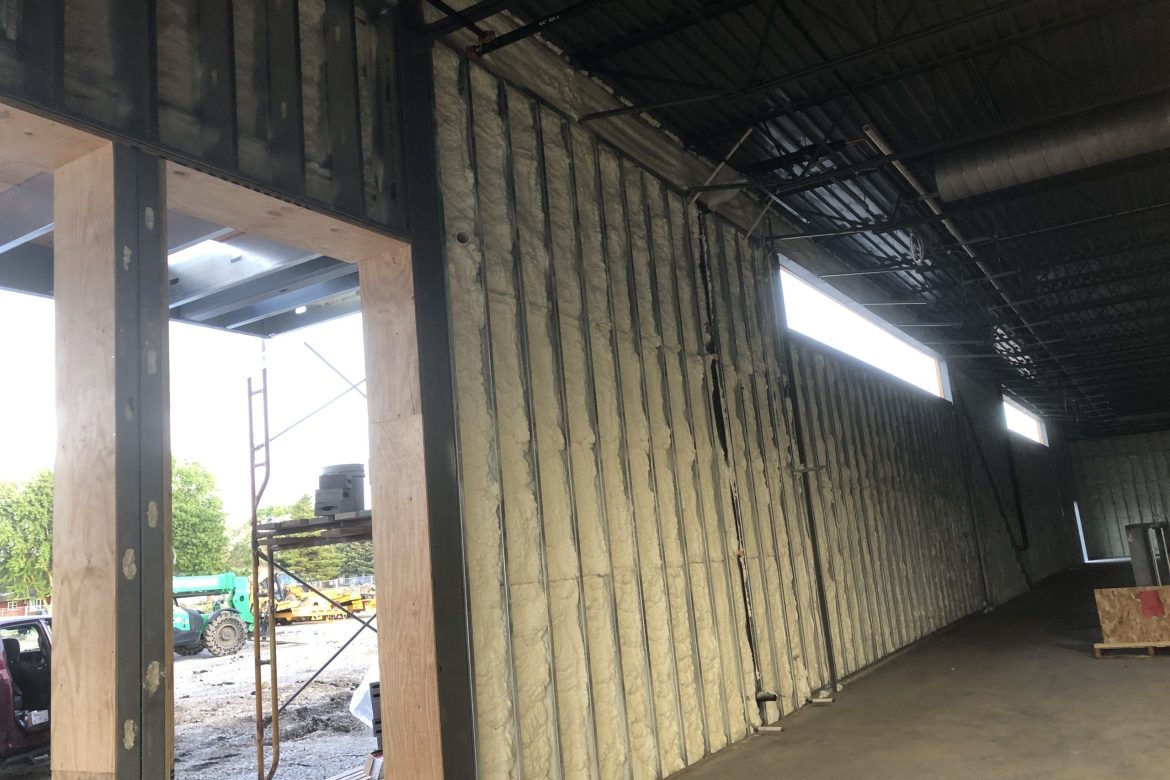
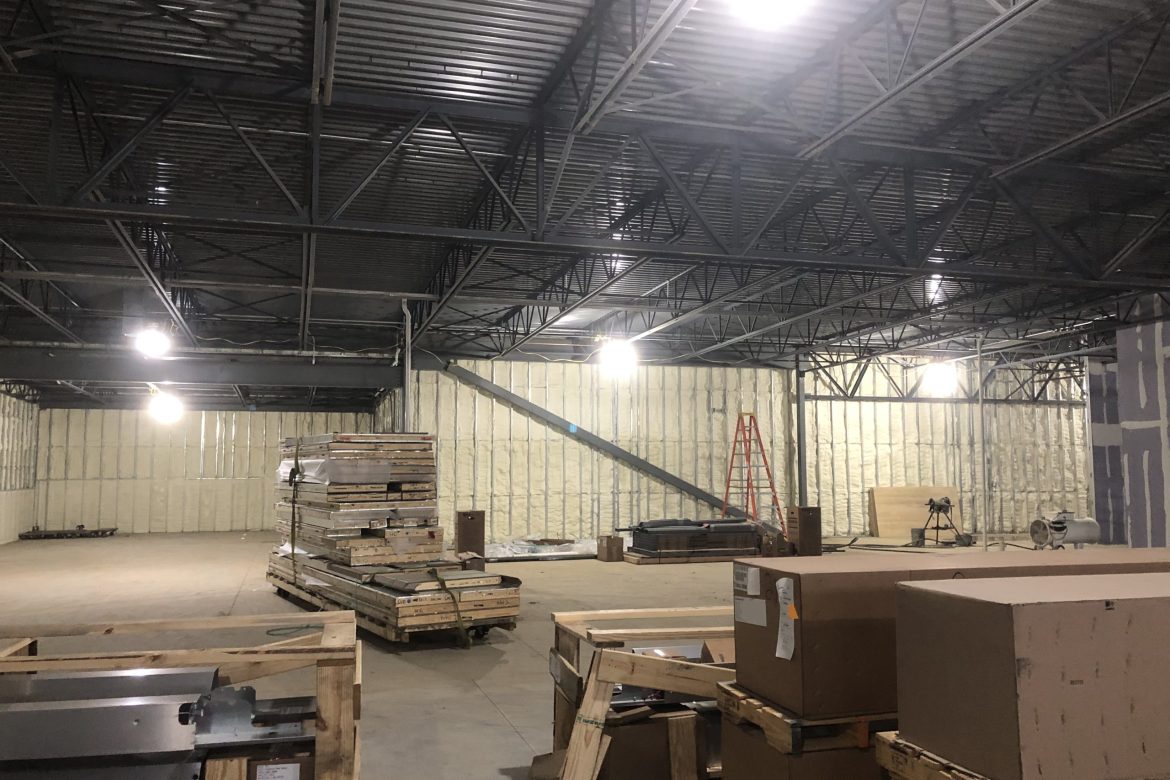
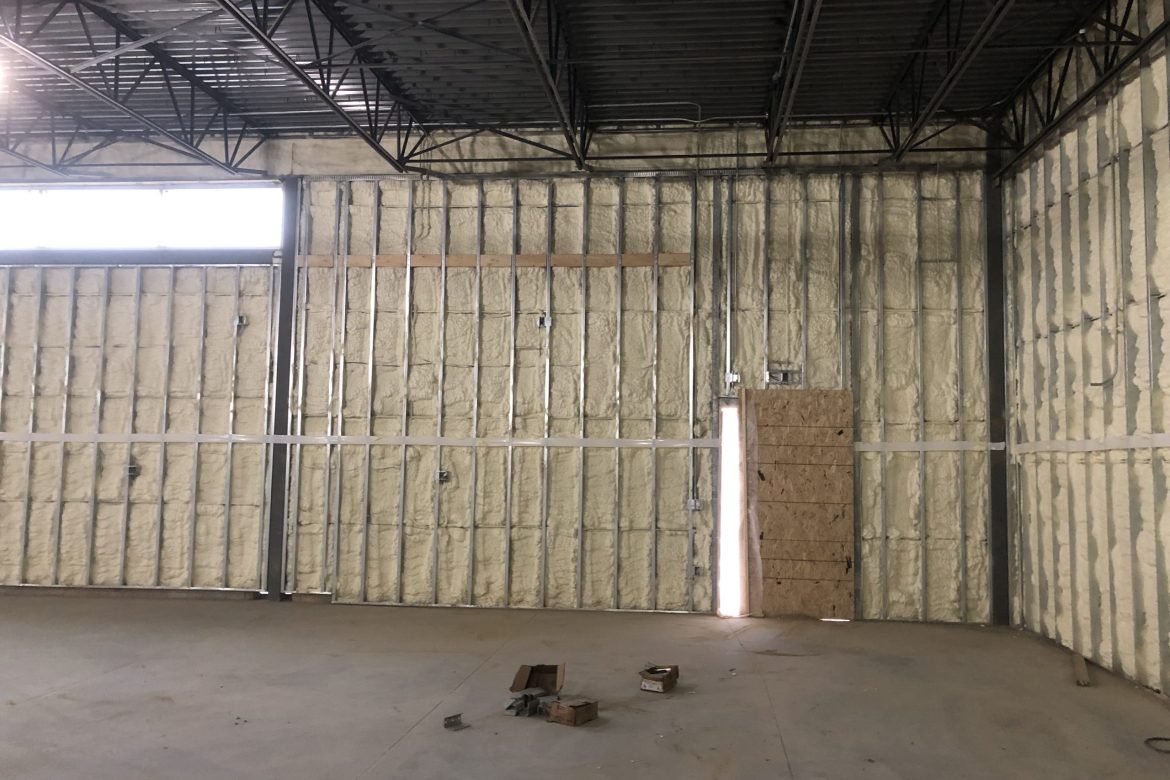
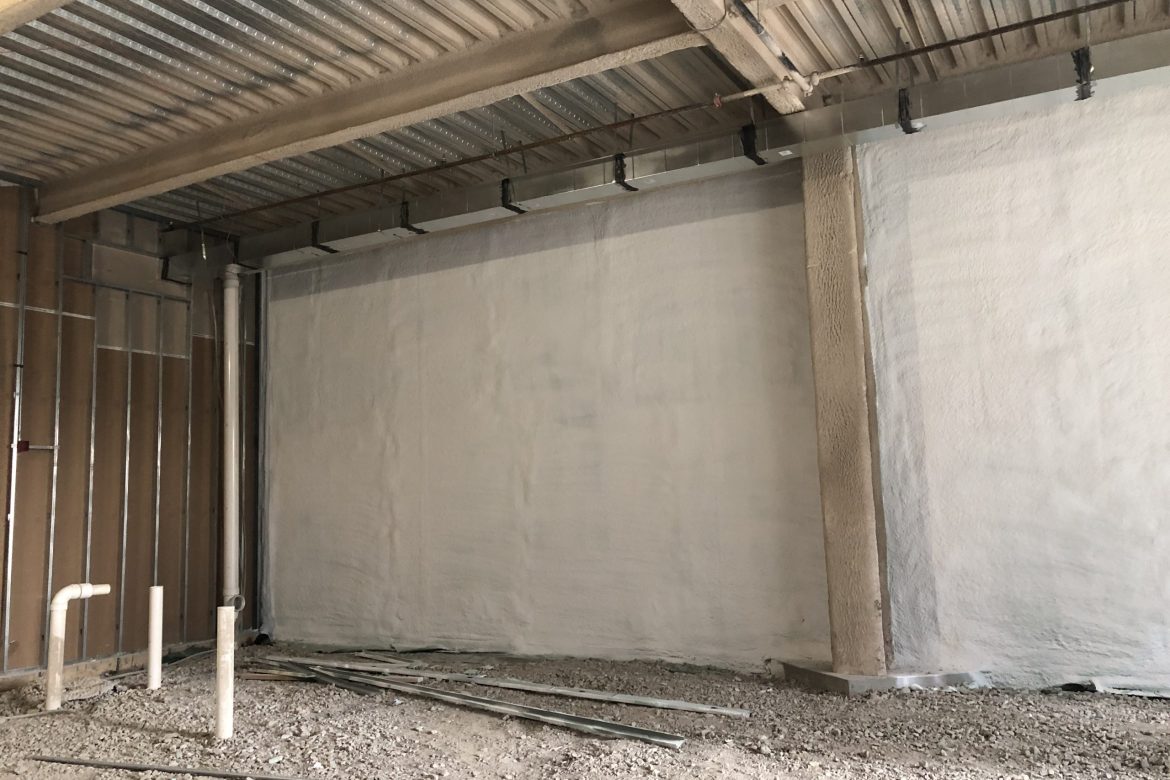
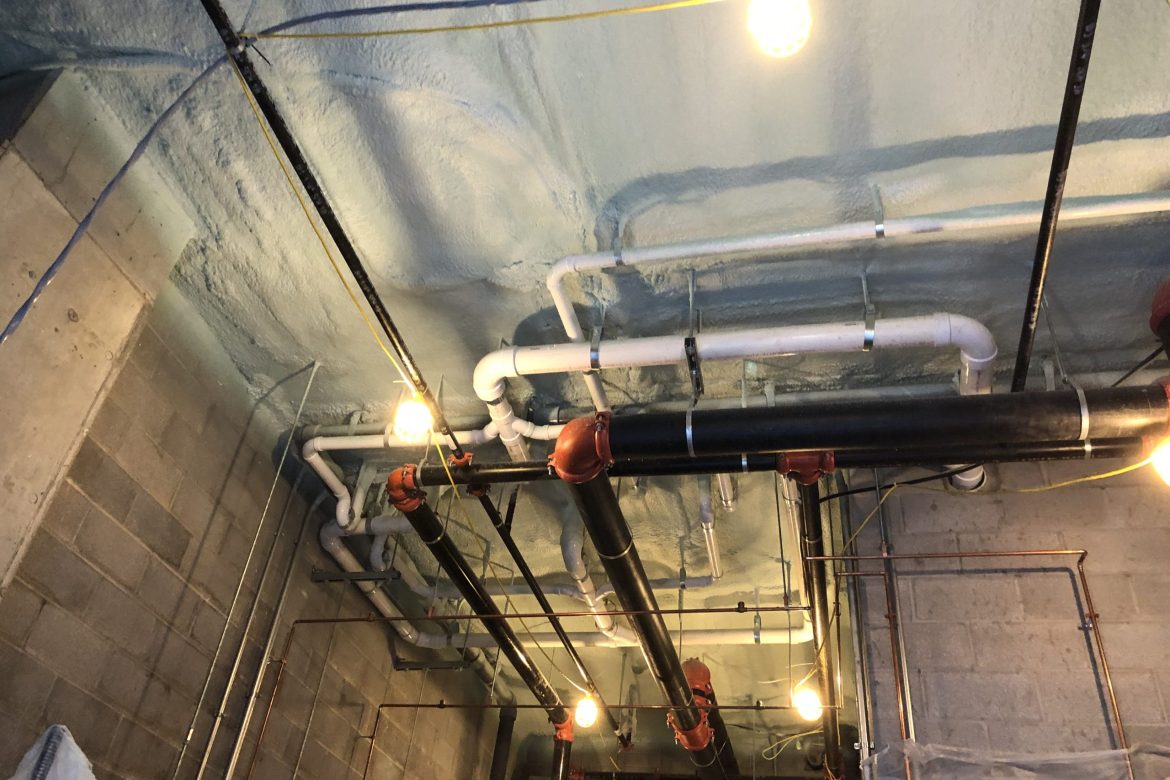


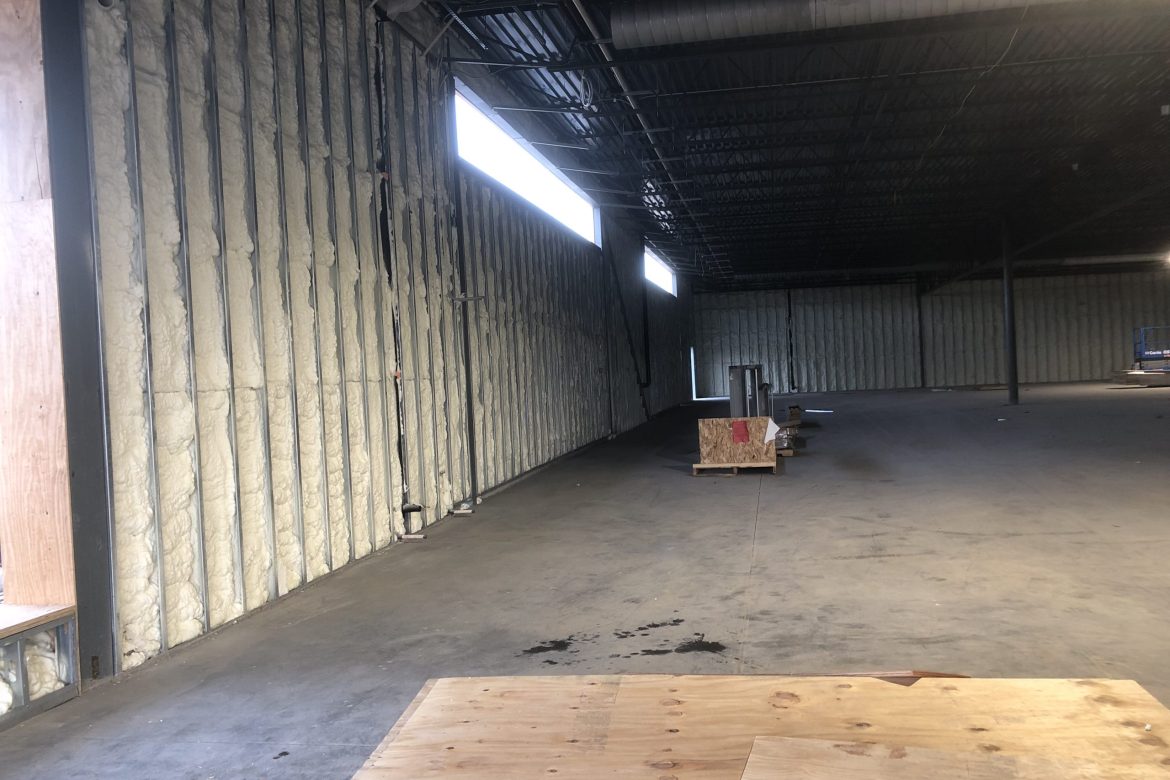
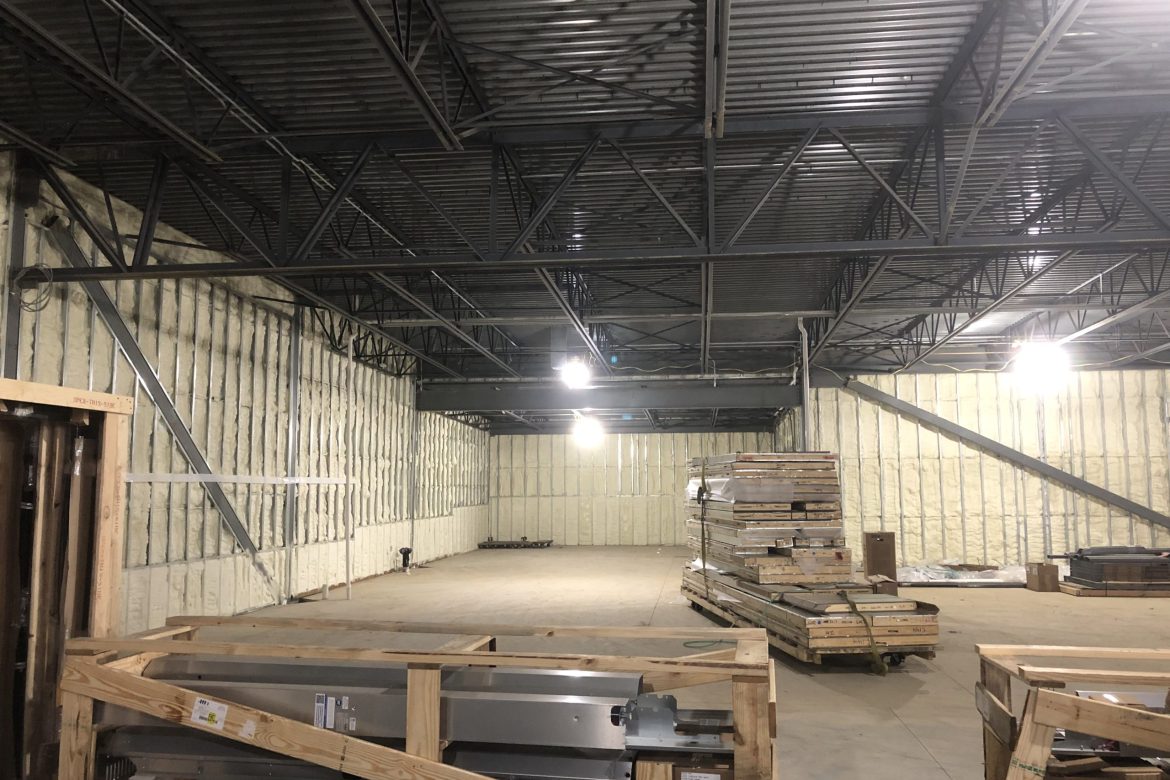

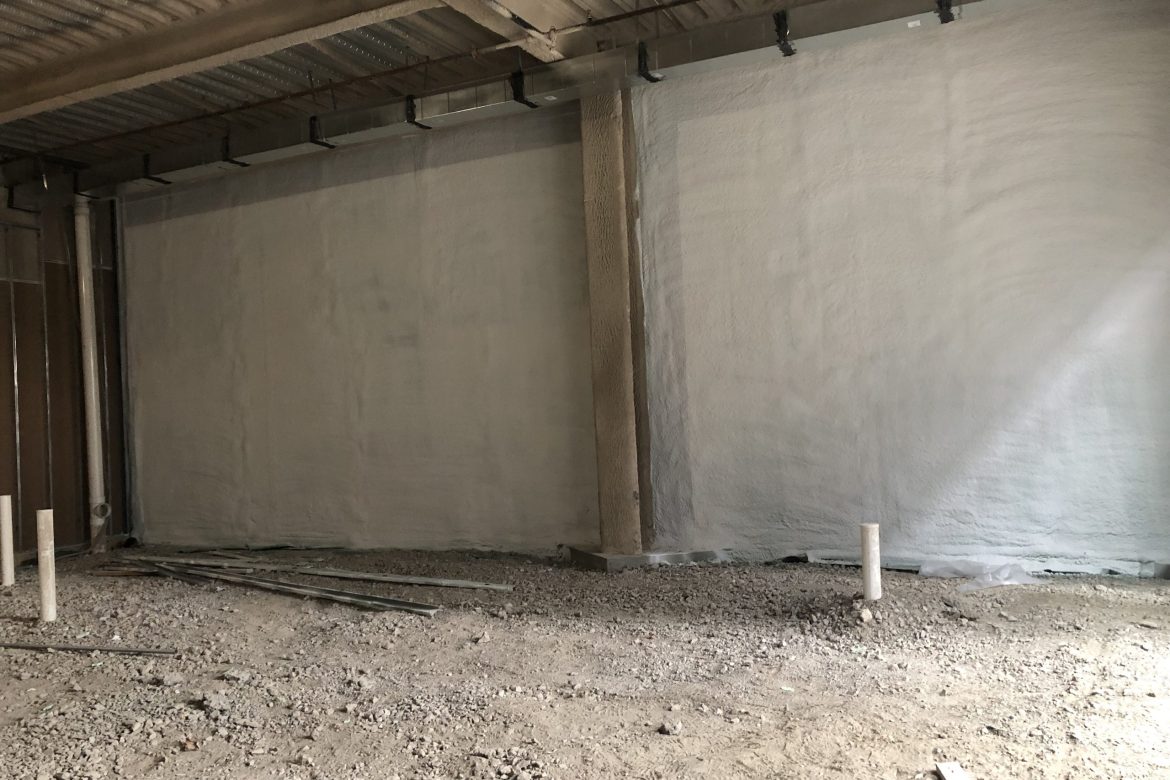
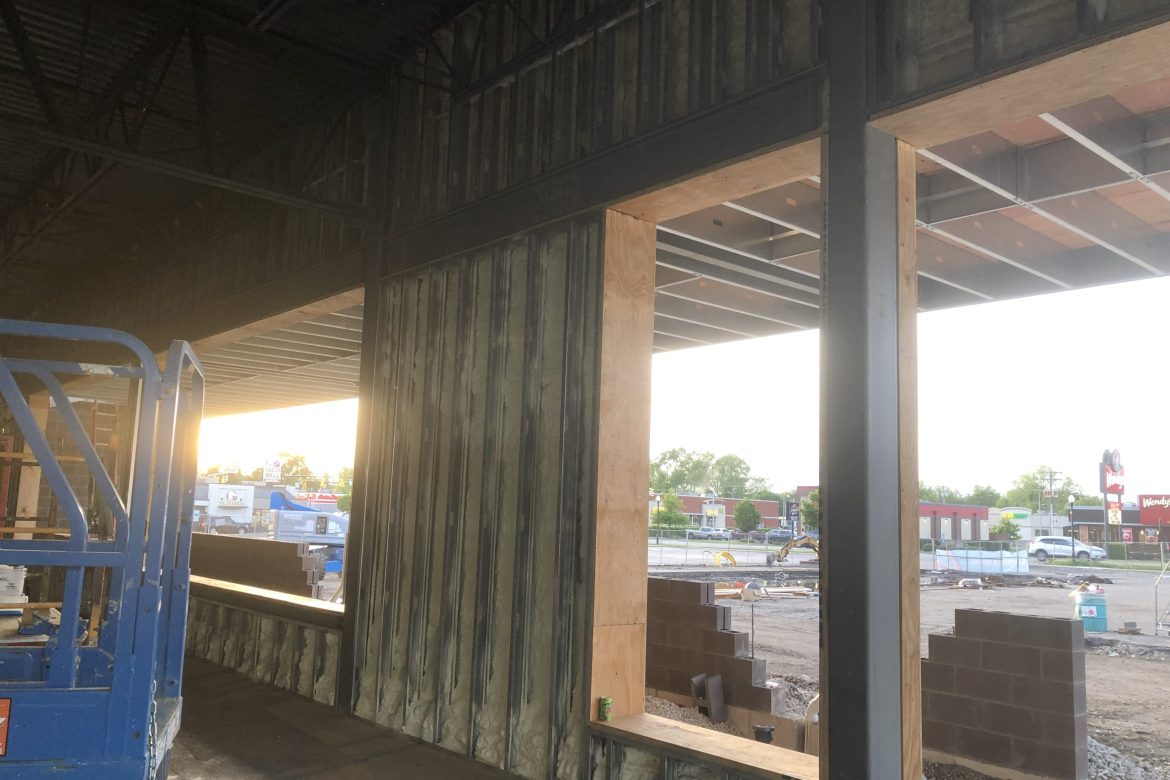
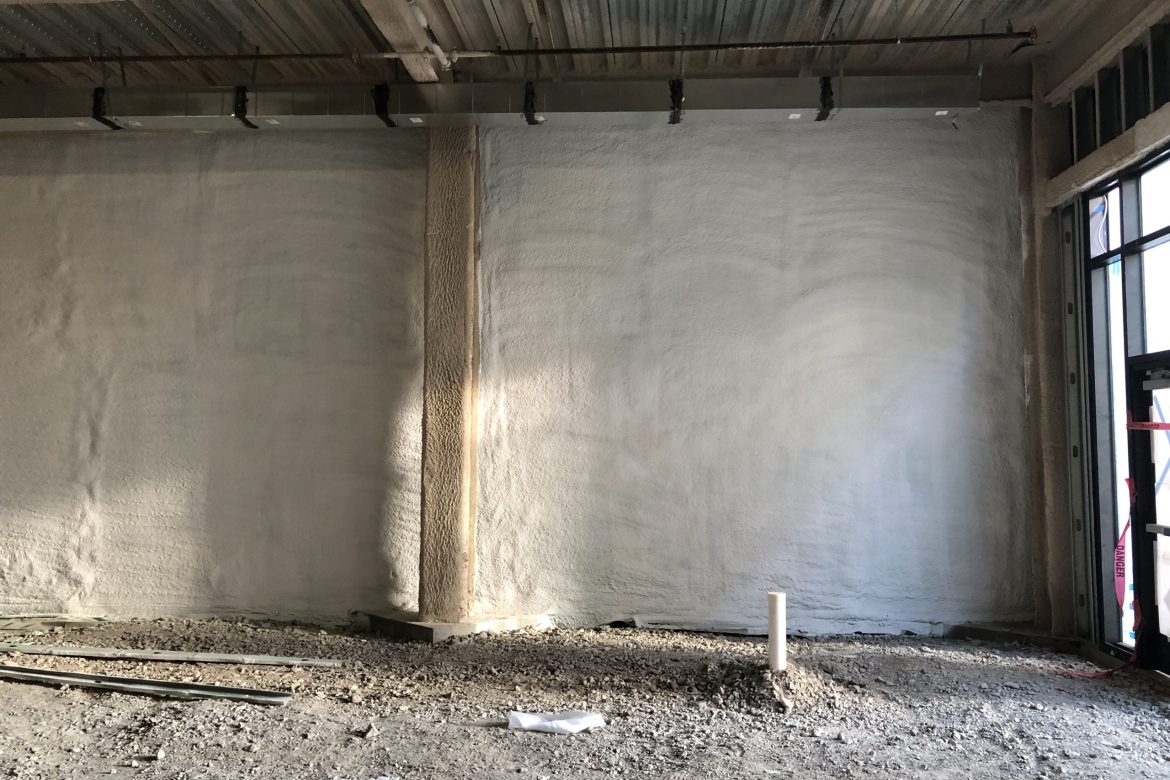
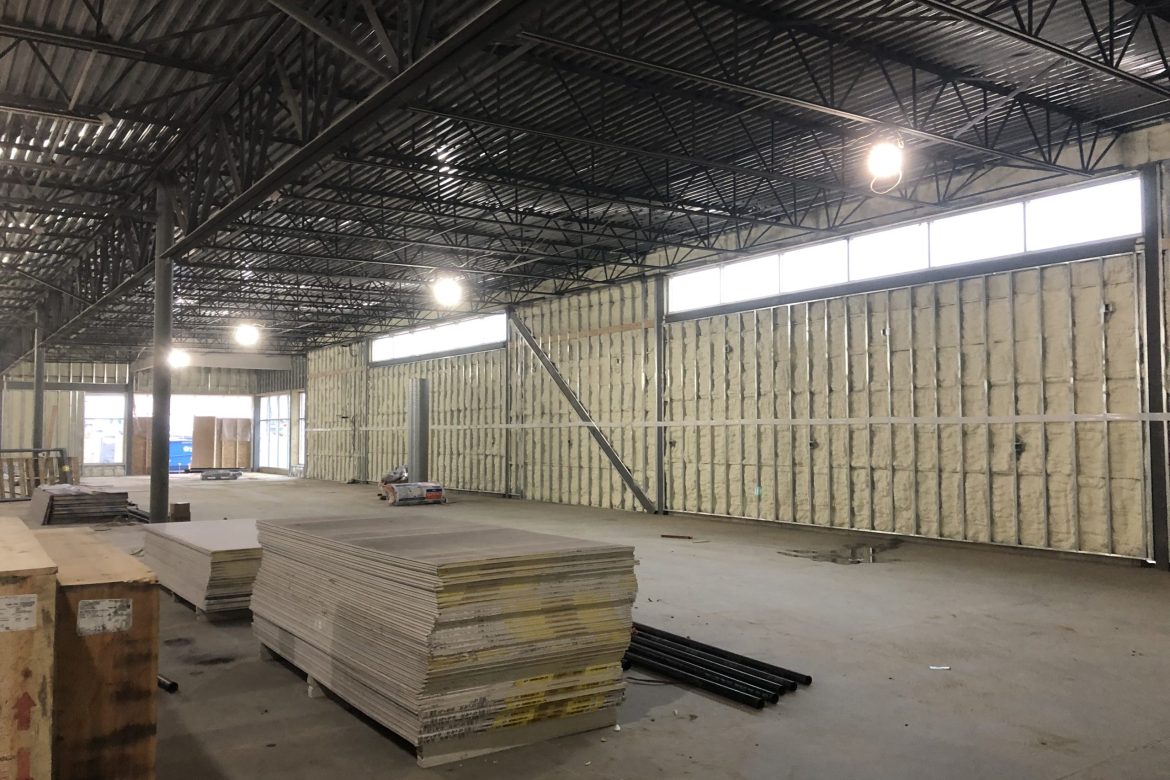


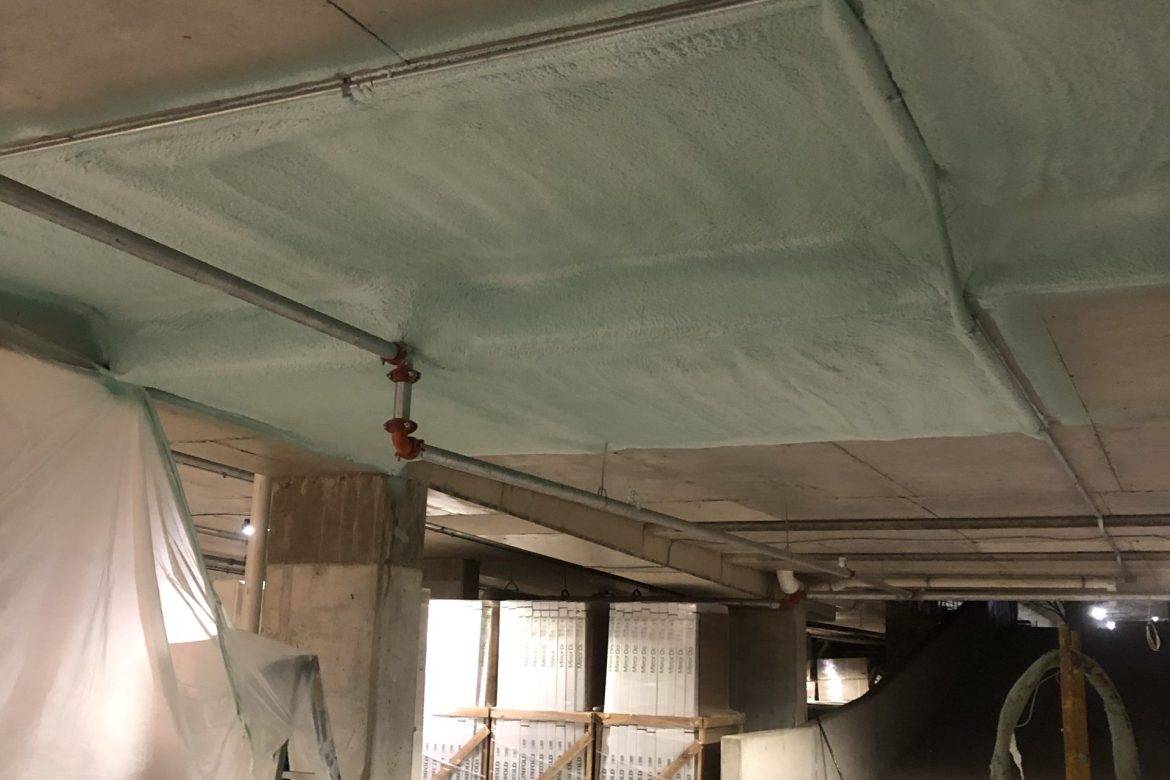
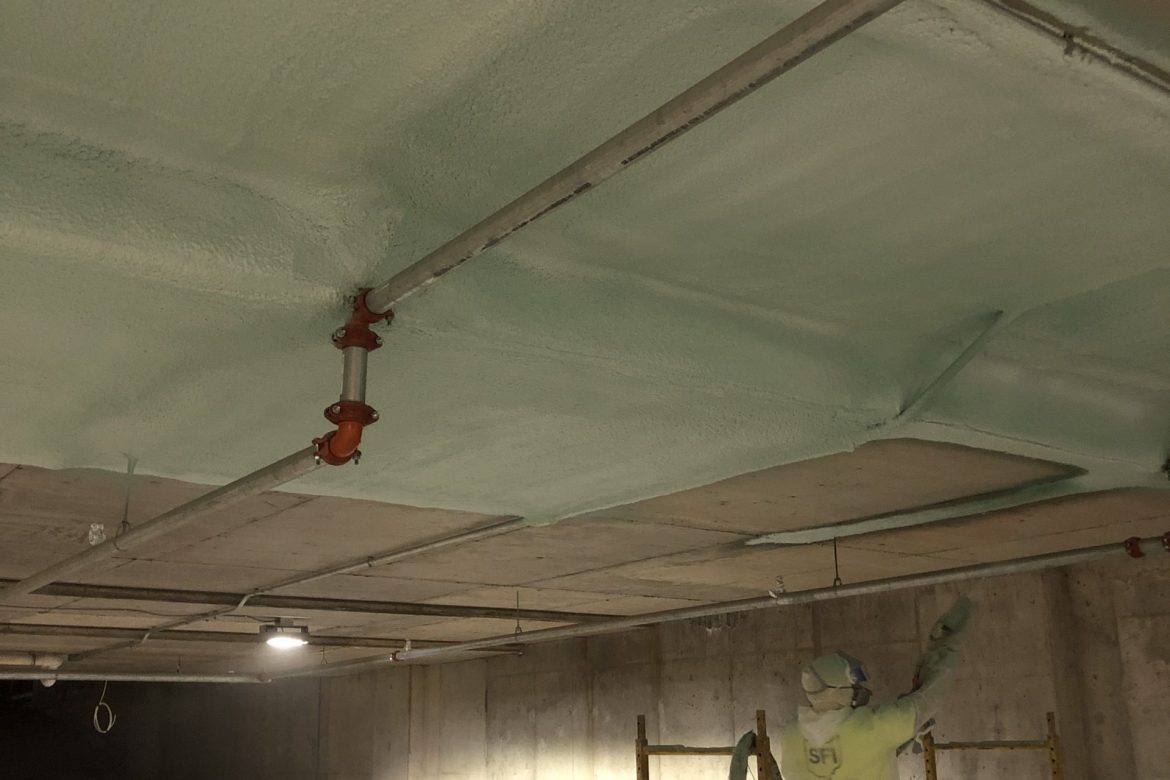
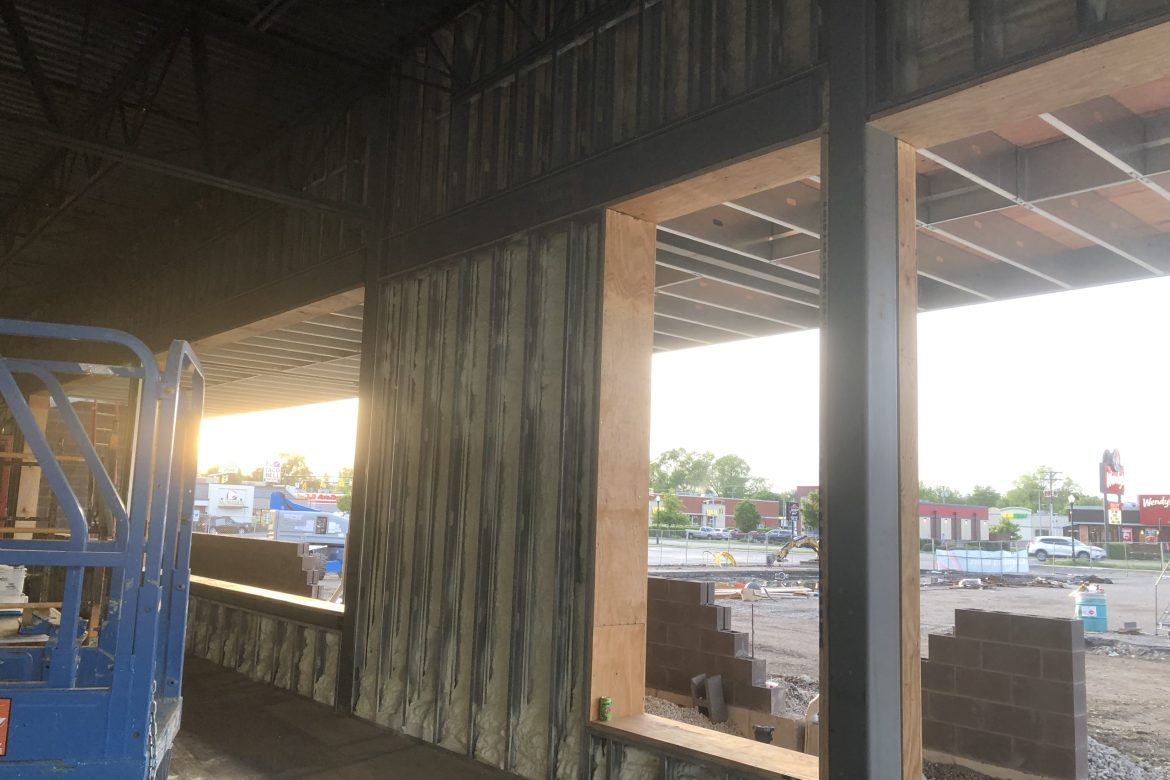
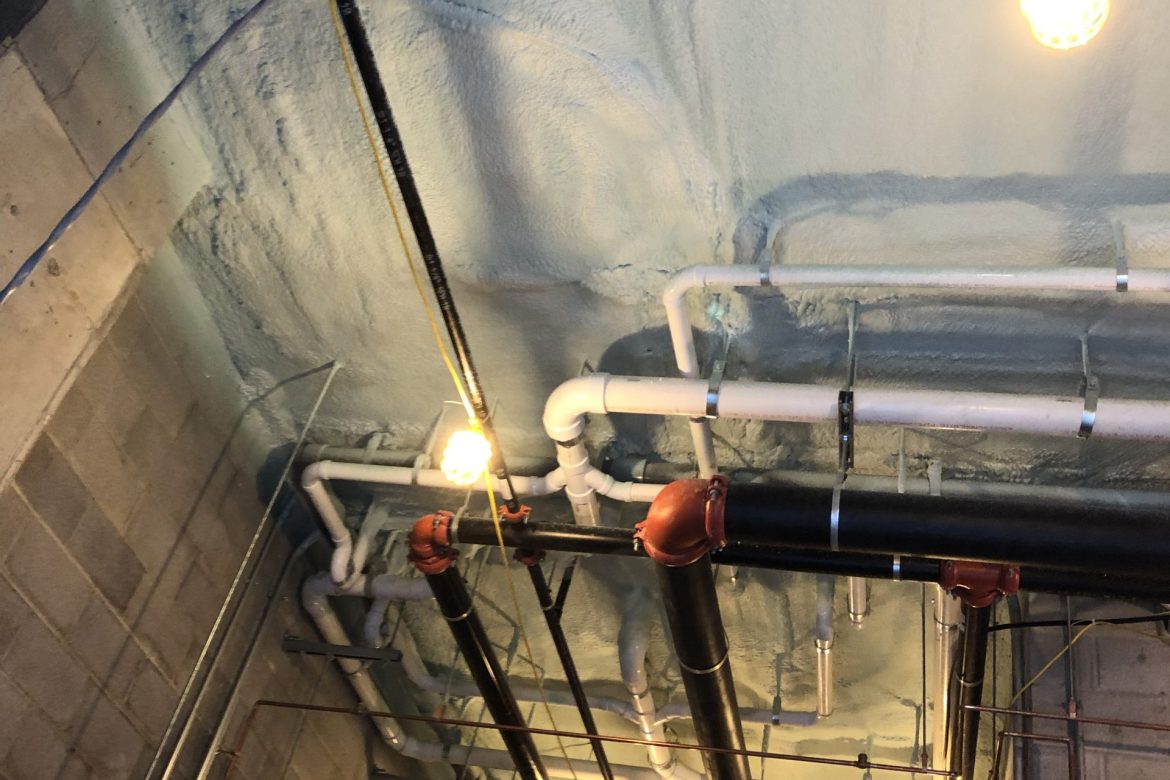
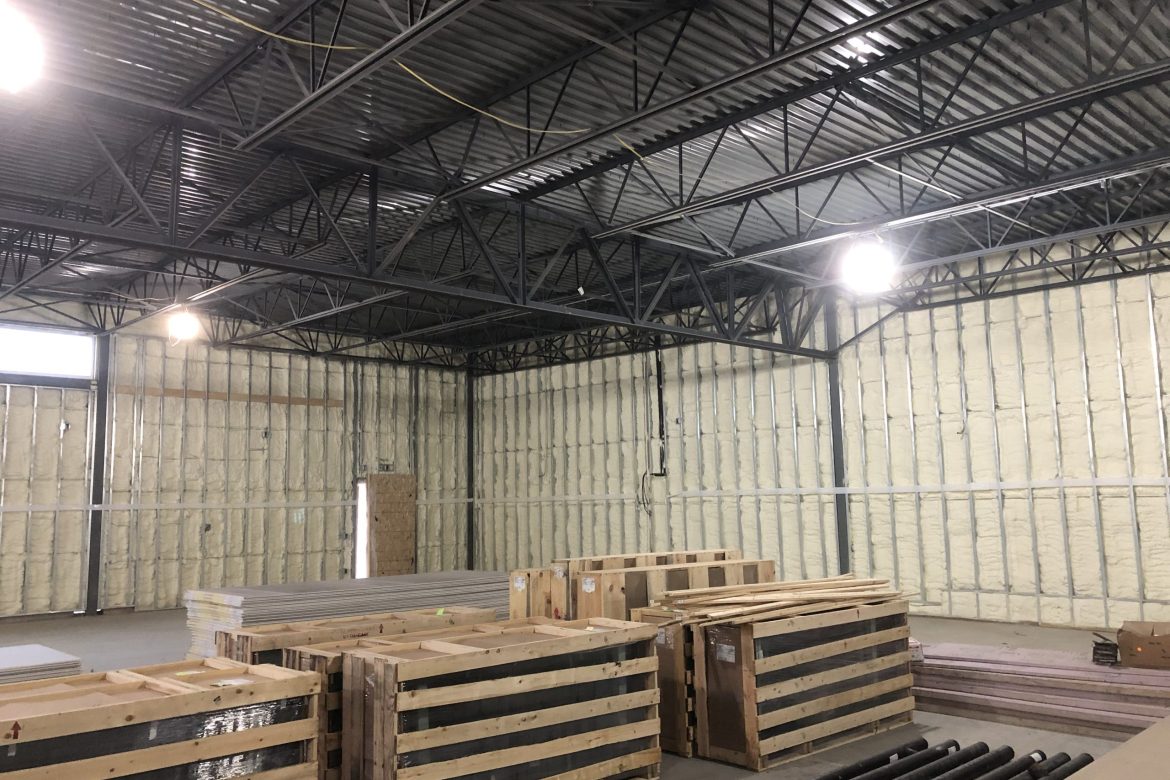
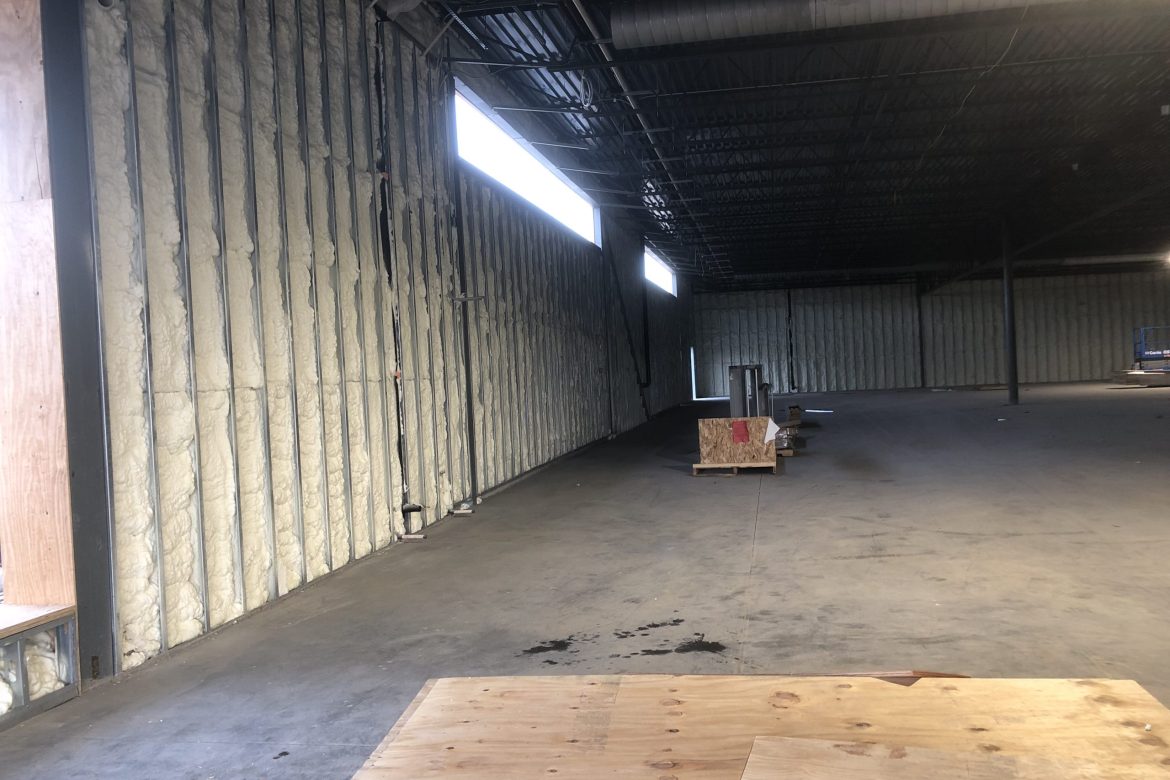
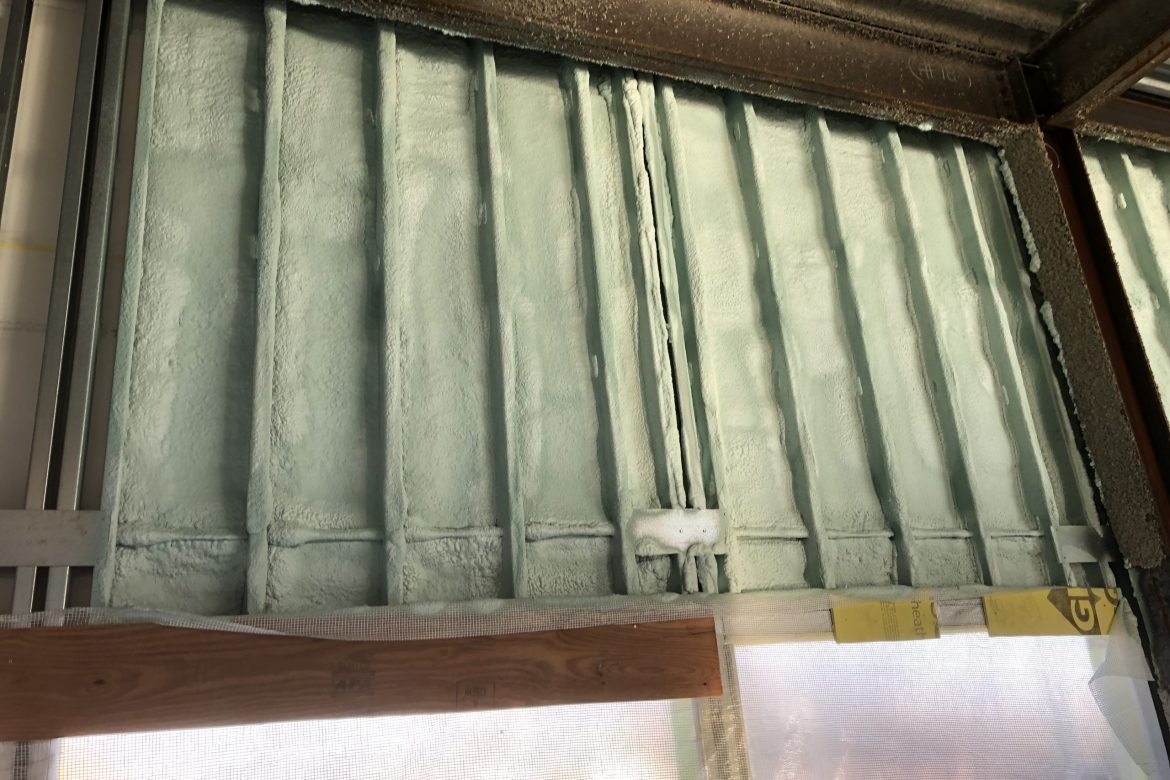
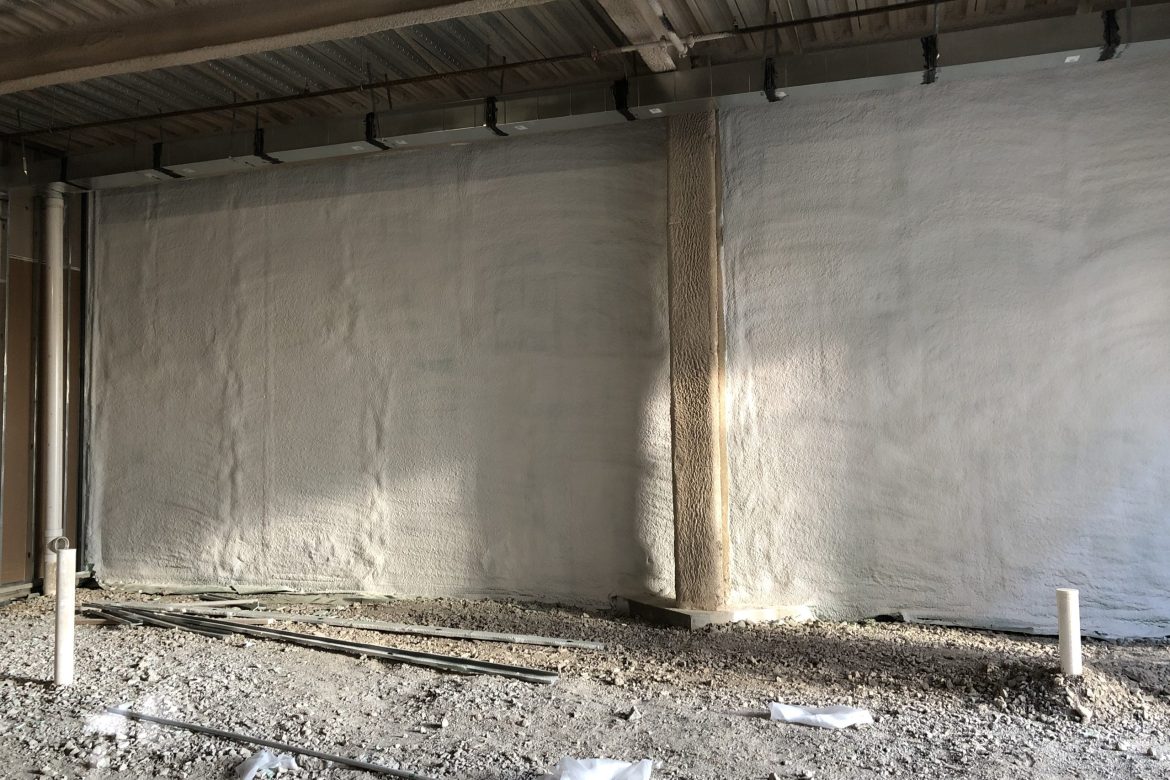
In commercial projects, both open-cell and closed-cell spray foam insulation offer distinct advantages, tailored to the specific requirements and conditions of the building.
Closed-cell spray foam, renowned for its dense and rigid structure, provides unparalleled thermal resistance and structural reinforcement. Applied within walls, roofs, and floors, it forms a seamless barrier that effectively seals off drafts, thermal leaks, and moisture infiltration. This robust insulation not only enhances energy efficiency by minimizing heat transfer but also adds significant strength to the building envelope, improving durability and resistance to external elements such as wind, moisture, and impact. Additionally, closed-cell foam’s impermeable nature makes it ideal for environments where moisture control is crucial, such as in humid climates or areas prone to flooding.
Conversely, open-cell spray foam offers a softer and more flexible structure, expanding to fill cavities and irregular spaces with ease. While it may not provide the same level of structural reinforcement as closed-cell foam, open-cell insulation excels in thermal performance and sound absorption. Applied in interior spaces such as offices, retail areas, and commercial buildings, it enhances comfort and indoor air quality by reducing noise transmission and regulating temperature fluctuations. Moreover, open-cell spray foam is typically more cost-effective than closed-cell foam, making it an attractive option for large-scale commercial projects where budget considerations are paramount.
Ultimately, the choice between open-cell and closed-cell spray foam insulation for commercial projects depends on factors such as building design, climate conditions, budget constraints, and desired performance outcomes. Closed-cell foam stands out for its superior thermal performance, structural integrity, and moisture resistance, making it well-suited for demanding environments that require long-term protection and energy efficiency. On the other hand, open-cell foam offers excellent thermal insulation and sound absorption at a more affordable price point, making it an appealing choice for projects where cost-effectiveness and indoor comfort are top priorities.
Spray Foam